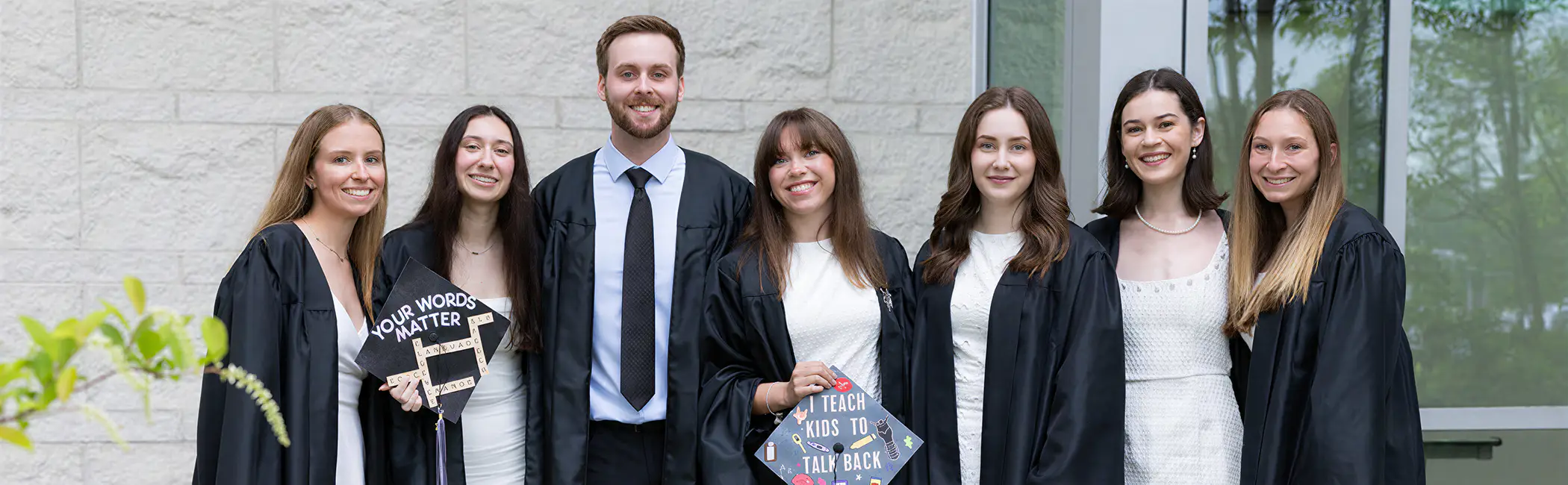
Stockton University’s Master of Science in Speech-Language Pathology prepares graduate students to become speech-language pathologists who assess and treat communication and swallowing disorders across the lifespan. The accredited program combines advanced coursework, clinical training and evidence-based practice to prepare students for careers in schools, health care, early intervention and private practice.
Students gain clinical experience in Stockton’s Speech and Hearing Clinic, through simulation and at off-campus sites such as hospitals, rehabilitation centers, private practices and schools. They can also take part in research, interprofessional learning and cohort-based collaboration. The program prepares graduates for New Jersey licensure, ASHA certification and certification as Speech-Language Specialists in New Jersey public schools.
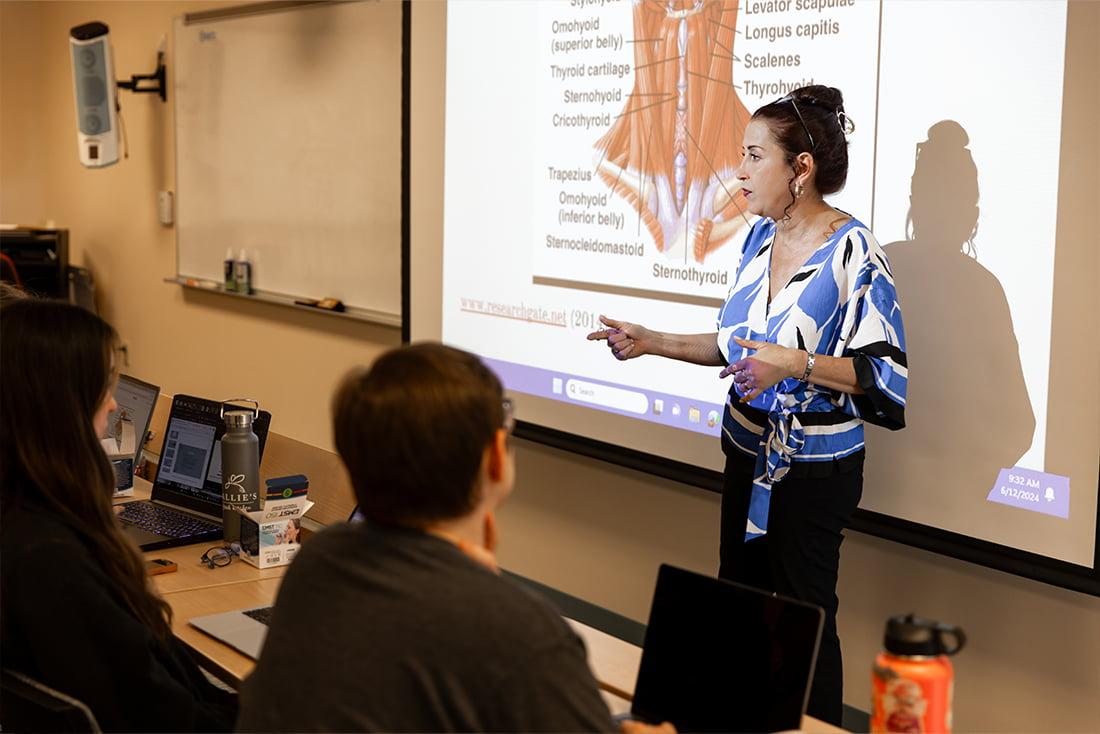
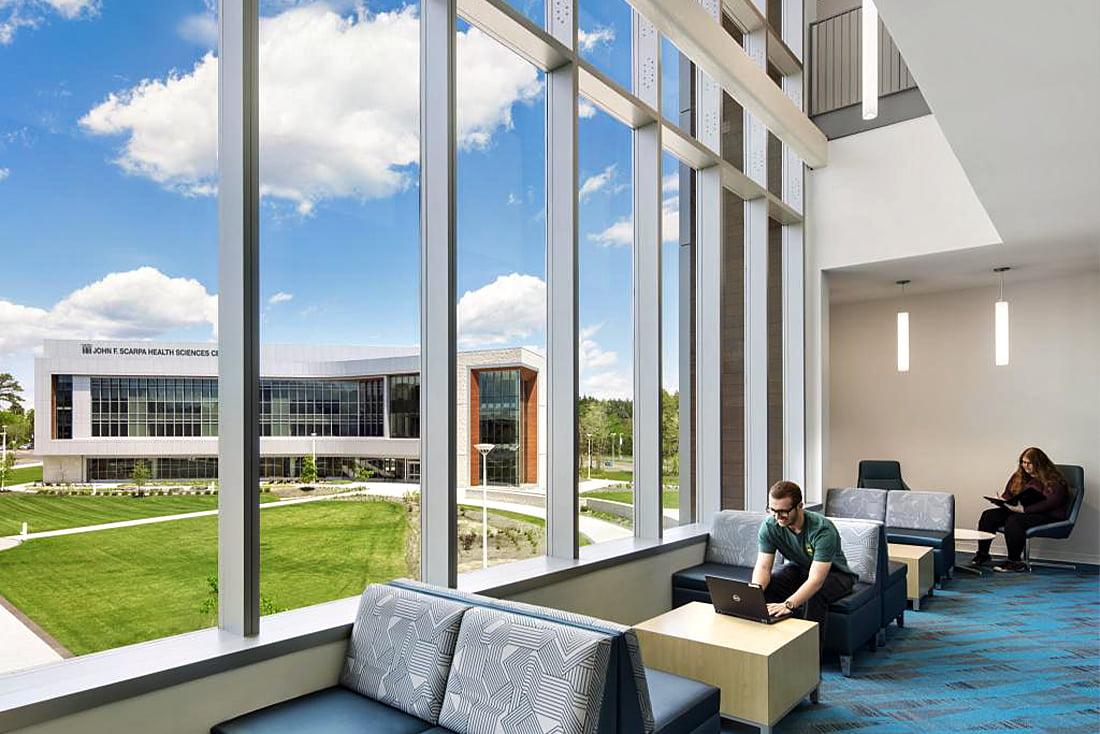
From Classroom Learning to Clinical Practice
What clinical experience will I gain in Stockton’s M.S. in Speech-Language Pathology program?
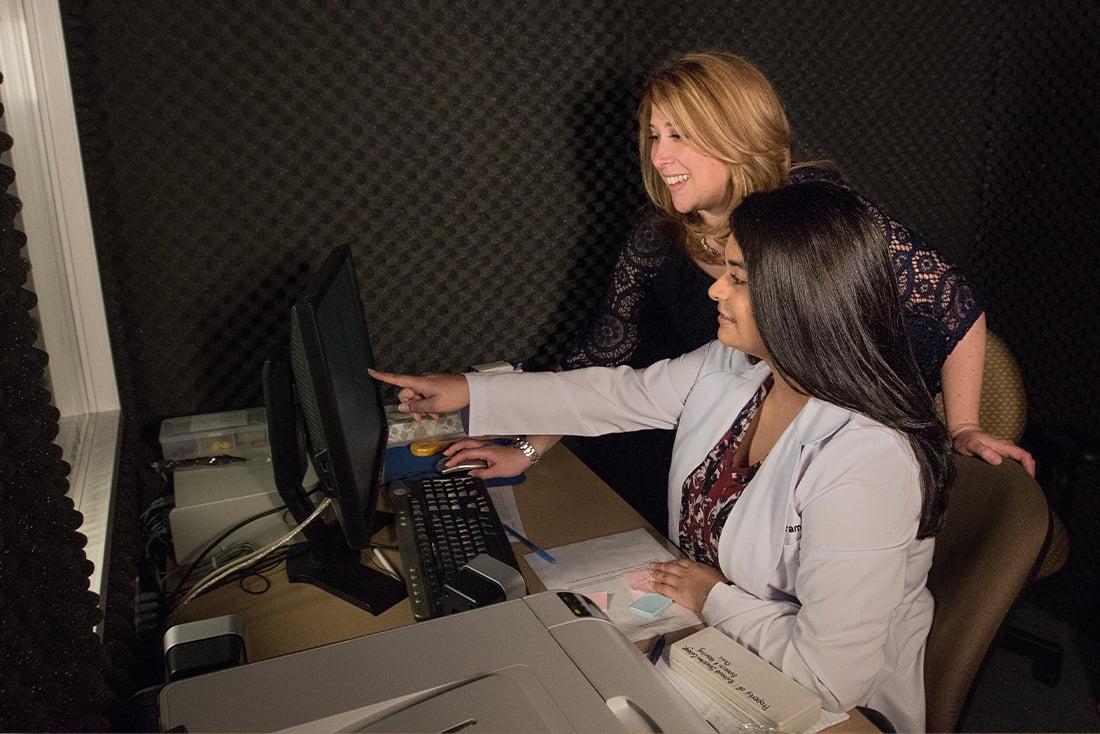
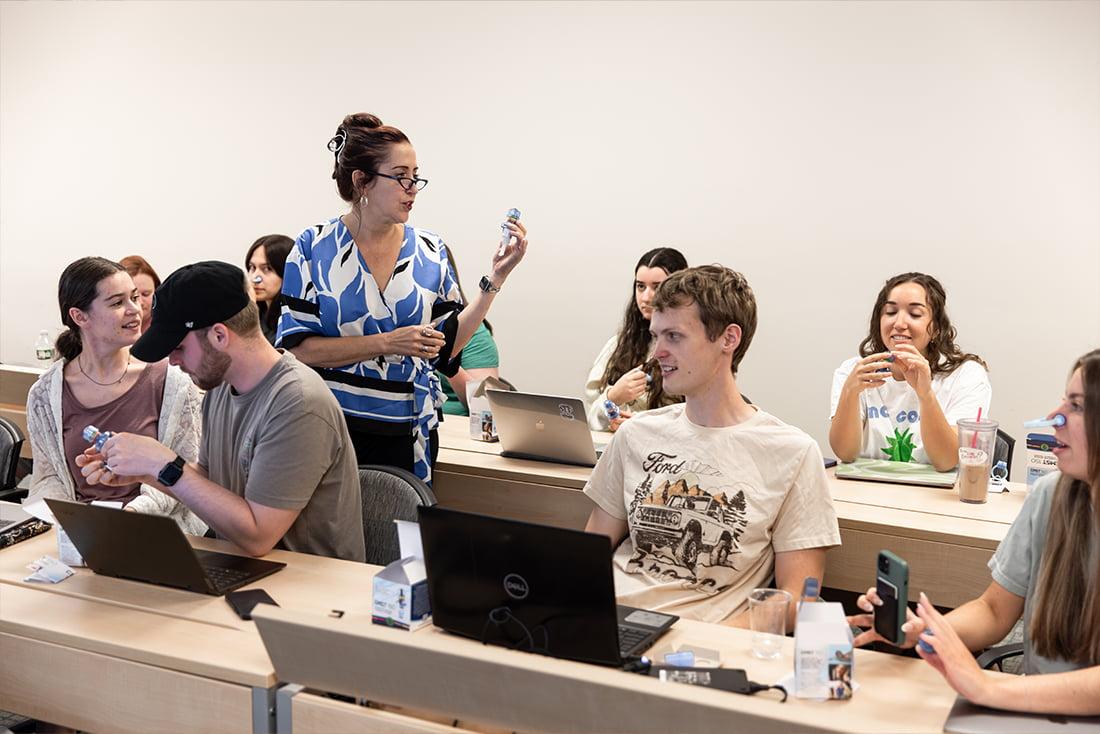
Students complete supervised clinical experiences in Stockton’s Speech and Hearing Clinic, through simulation lab activities, and at off-campus sites. The program includes 400 clinical hours and gives students experience assessing and treating communication and swallowing disorders in people of all ages.
How does clinical training progress throughout the program?
Clinical experience begins in Stockton’s Speech and Hearing Clinic, where students apply classroom learning with clients under supervision. After gaining experience on campus, students move into off-campus externships in settings such as hospitals, rehabilitation centers, private practices and schools.
How is Stockton’s M.S. in Speech-Language Pathology program structured?
The Master of Science in Speech-Language Pathology is a full-time program completed over five consecutive semesters, including one summer term. The first year includes in-person classes and clinical experiences, while the second year uses a hybrid format to support full-time externships.
What learning opportunities are available beyond regular coursework?
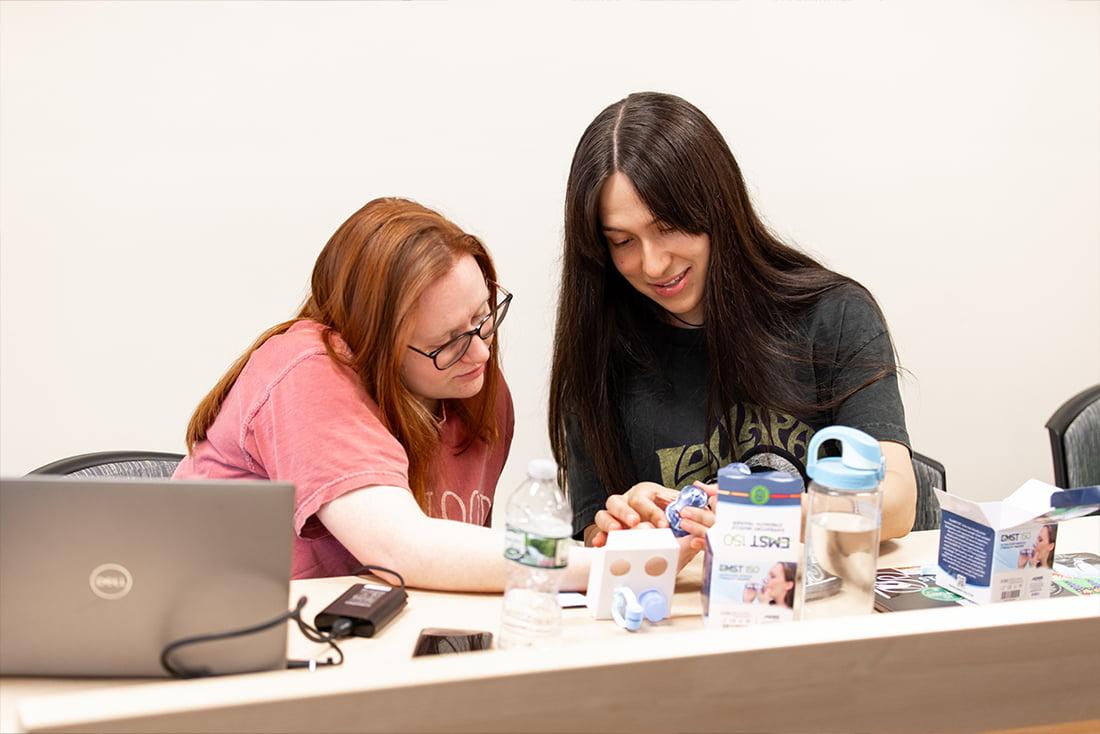
Students can take part in faculty research, simulation-based learning and interprofessional experiences with students in other health and education programs. Additional opportunities may include work connected with the Adler Aphasia Center, National Stuttering Association and Parkinson Voice Project.
What careers can I pursue with a master’s degree in speech-language pathology?
Graduates are prepared to work as speech-language pathologists in schools, hospitals, rehabilitation centers, early intervention programs, private practices and other clinical settings. The program also prepares students for New Jersey licensure, ASHA certification and certification as Speech-Language Specialists in New Jersey public schools.
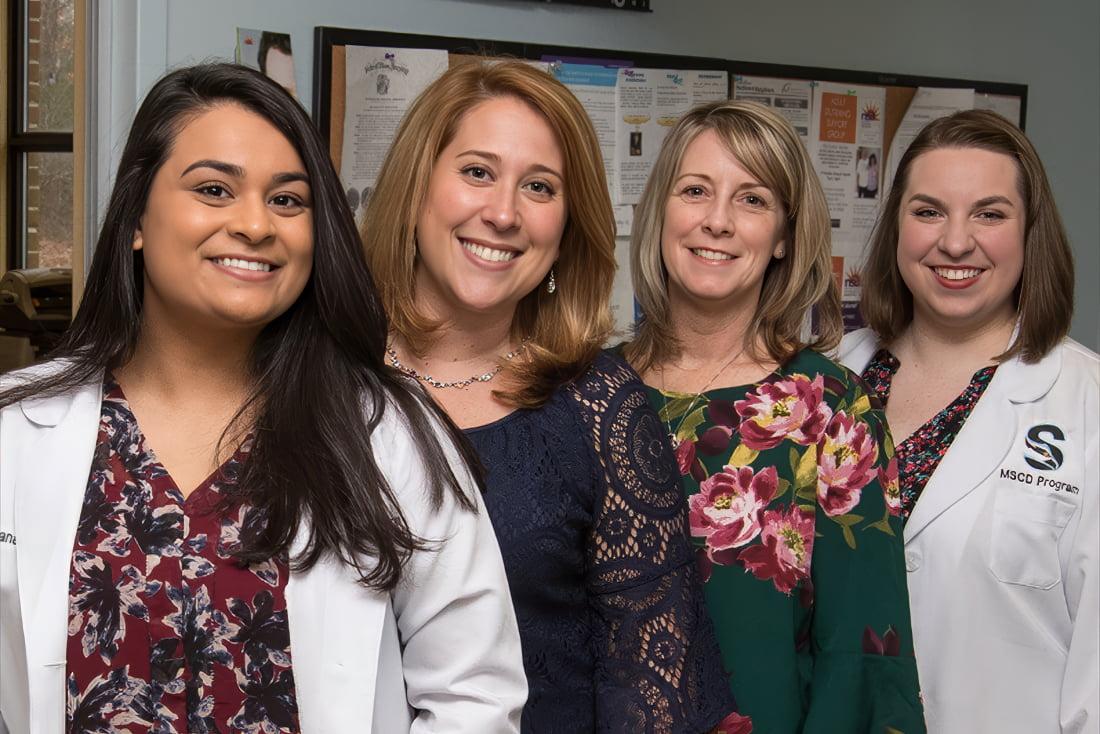
Program Faculty
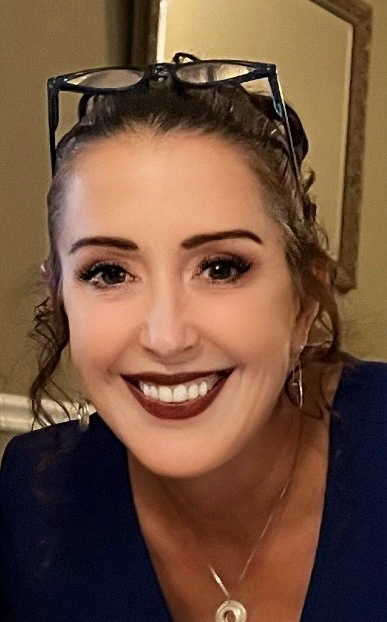
Stacy Gallese Cassel, Ph.D., CCC-SLP
Phillip Hernández, Ed.D., CCC-SLP, BCS-CL
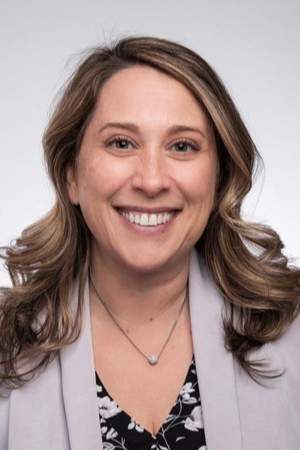
Amanda Copes, Ed.D., CCC-SLP
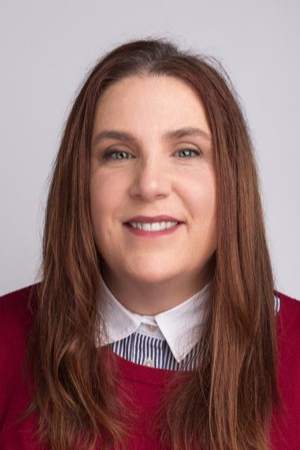
Kelly Maslanik M.S., CCC-SLP
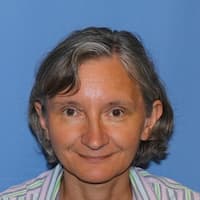
Monika Pawlowska, Ph.D.
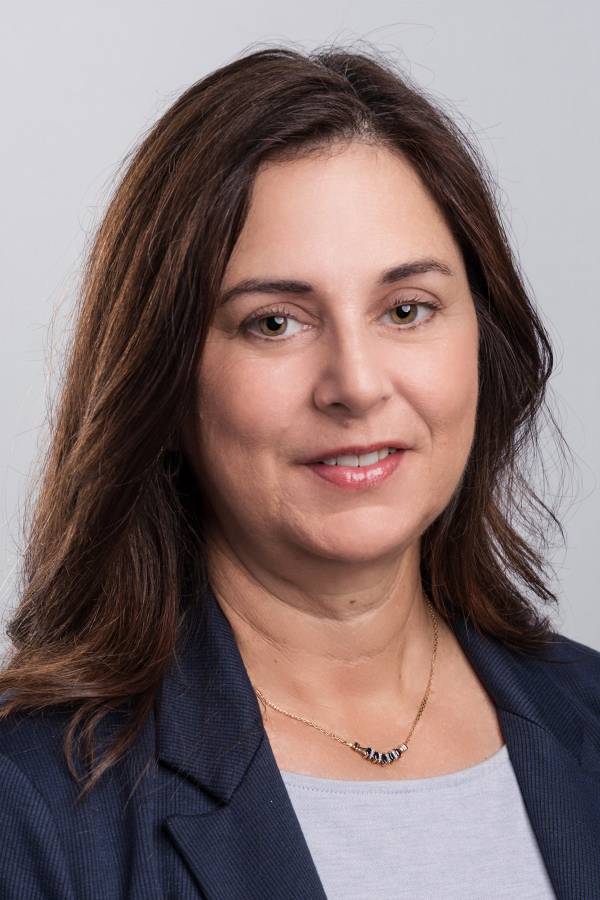
Mary Ann Schiattarella, Ed.D., CCC-SLP
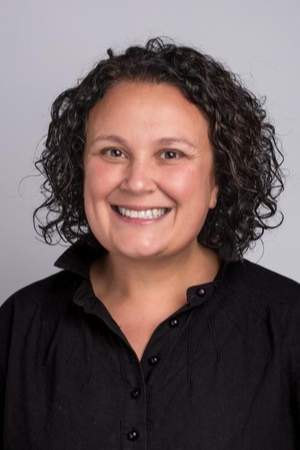
Michelle Swartz, Ph.D., CCC-SLP

Richard Berry, Ph.D., CCC-A
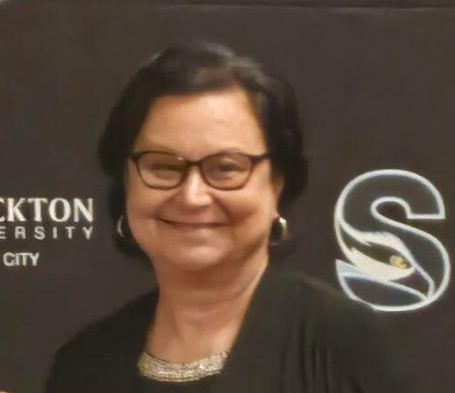
Amy Hadley, Ed.D., CCC-SLP
Student Opportunities
Upon discovering that Stockton’s program offered students access to the Stockton Speech & Hearing Clinic as the location for one of their clinical experiences, I felt complete relief. The faculty and staff of the clinic were encouraging and the atmosphere proved to be a comforting, yet challenging location to break the ice for my first clinical experience. Reflecting back on the program, I was extremely fortunate to have access to such a location to help make the transition from textbooks to fieldwork.
Knowing that I would be able to begin working on my clinical skills at the Speech & Hearing Clinic the first semester was a big factor in choosing to apply to Stockton. The Speech & Hearing Clinic offers students a diverse pool of clientele to get experience with before you move on to off-campus externship placements.
The clinic staff and faculty have been especially helpful through my first year with all of the real-world knowledge and confidence they have given me when I thought I was not ready for what was ahead.
The Master of Science in Speech-Language Pathology program offers students hands-on clinical experience in the Stockton Speech & Hearing Clinic.
Under the direct supervision of licensed, ASHA-certified speech-language pathologists, students:
- work with client populations across the lifespan
- share ideas and work collaboratively with faculty and peers
- develop goals and objectives for therapy
- create appropriate treatment plans for clients
- use clinical materials and technology
First-Year Clinical Experiences – Stockton Speech and Hearing Clinic
Foundational Clinical Opportunities
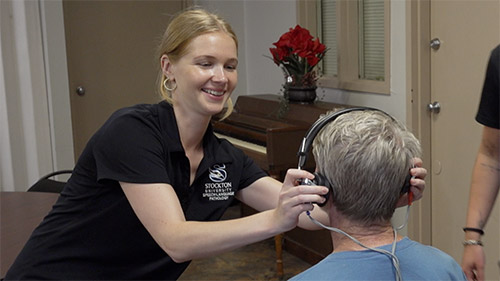
- Hands-on experience treating clients across the lifespan through both in-person sessions and telepractice options beginning the first semester
- Student-facilitated, problem-based learning classroom instruction
- Immersive simulations with standardized patients in our simulation lab
- Opportunities to engage in local, state, and national communication organizations
Community-Based Experiential Learning
- Students can engage in clinical opportunities in the community according to their
interests:
- Aphasia communication groups
- Augmentative communication camps
- Speech and language screenings
- Hearing screenings
- Cognitive-linguistic screenings
- Family and community outreach
- Interprofessional collaborative experiences
Second-Year Clinical Experiences
Advanced Clinical Practicum
- Supervised clinical experience in a variety of off-campus settings
- Full-time clinical practice through two 14-week externship practicums
- Practice assessing and treating communication and swallowing disorders
- Apply classroom knowledge while working with professionals in other fields
Over 400 affiliated locations across the tri-state area:
- Public Schools
- Private Schools
- Special Services Schools
- Adult Care Programs
- Private Practices
- Early Intervention
- Skilled Nursing Facilities
- Home Care
- Post-Acute Rehabilitation for Traumatic Brain Injury
- Large Healthcare Network Hospitals
- Specialty Hospitals
- Neonatal Intensive Care (NICU)
- Veterans’ Medical Centers
- Pediatric Health Centers
- Inpatient Rehabilitation Centers
- Outpatient Rehabilitation Centers
 The MSLP program supports the Adler Aphasia Center. Students facilitate an Aphasia
Communication Group with faculty supervision.
The MSLP program supports the Adler Aphasia Center. Students facilitate an Aphasia
Communication Group with faculty supervision. Stockton University hosts monthly support group meetings for the Atlantic County Family
Chapter of the National Stuttering Association on our Galloway campus. Students can
learn about stuttering alongside people who stutter, their families and speech-language
pathologists.
Stockton University hosts monthly support group meetings for the Atlantic County Family
Chapter of the National Stuttering Association on our Galloway campus. Students can
learn about stuttering alongside people who stutter, their families and speech-language
pathologists. Stockton University is the SPEAK OUT!® Therapy and Research Center in New Jersey.
We offer the SPEAK OUT!® Therapy Program in collaboration with Parkinson Voice Project®. Visit the Speech and Hearing Clinic for information about services.
Admission Criteria
Application Process:
- The Master of Science in Speech-Language Pathology Program uses CSDCAS, a centralized application service for students applying to graduate programs in Speech-Language Pathology.
- The CSDCAS application for the fall 2027 cohort opens on July 15, 2026, and closes on March 20, 2027. Applications can be submitted during this timeframe.
- Only complete applications verified by CSDCAS will be reviewed by the program.
- Review of completed and verified applications will begin on November 1, 2026 and continue until the cohort is filled. The cohort may fill before the application deadline.
- Candidates whose applications have been reviewed may be invited to an interview.
Rolling Admissions:
- Stockton’s MSLP program reviews applications on a rolling basis.
- Apply early for the best opportunity to be considered for admission.
- Interviews will be scheduled and admissions decisions will be made on a rolling basis until the cohort is filled.
- Once the cohort is filled, applicants may choose to apply in the next admissions cycle.
Prerequisite Requirements
- A bachelor’s degree
- Cumulative 3.0 GPA or higher
- Completion of prerequisite coursework with a grade of "C" or better
Prerequisite Coursework
Applicants must complete prerequisite coursework with a grade of C or better by the end of the summer before entering the program. Some of this coursework can be completed through Stockton University's undergraduate course offerings. The coursework should cover the concepts of:
- Anatomy and Physiology of the Speech and Hearing Mechanism
- Phonetics
- Speech and Hearing Science
- Introduction to Communication Disorders
- Speech and Language Development
While not required, coursework in audiology as well as linguistics is recommended.
For students entering in fall 2027, the following coursework supports the 2027 ASHA certification standards. Complete a course in each area with a grade of C or higher:
- Biological Science
- Physical Science (coursework in chemistry or physics)
- Social Science (such as psychology or sociology)
- Statistics and/or Research Methods
For additional information on course content requirements go to the 2027 ASHA certification standards.
Application Materials
Only verified applications through the centralized application system (CSDCAS) move to the selection committee. Applications must be completed (e-submitted, payment received, and transcripts received) at least four weeks in advance of the deadline to ensure the application is verified on time. Program-specific admissions information including prerequisite course requirements can be reviewed on the CSDCAS Stockton Profile page.
Your CSDCAS application should include:
- Official transcripts from all colleges and universities attended (including Stockton as well as community colleges if applicable). Step-by-step instructions found here.
- Three letters of recommendation from individuals who know your academic potential, character or work ethic; no personal letters accepted.
- An essay responding to the prompt in the admissions application.
- TOEFL scores if your native language is not English.
- A résumé and any additional information requested in CSDCAS.
For details, visit the CSDCAS application website.
The admissions process also includes an interview with program faculty. Information will be sent to your email.
The MSLP program does not require GRE scores.
Admissions FAQ
1. When is the deadline for applications?
The application deadline for the fall 2027 cohort is March 20, 2027. Review begins November 1, 2026, and continues until the cohort is filled, which may happen before the deadline. Submit a complete CSDCAS application at least four weeks before the deadline to allow time for verification.
2. What are the admission requirements?
- Completion of the MSLP application through https://csdcas.liaisoncas.com
- Completion of prerequisite courses with a grade of C or better by the end of the summer before entering the program.
- Cumulative GPA of 3.0 or higher.
- Official transcripts for all course work at regionally accredited colleges or universities attended must be submitted to CSDCAS. Step-by-step instructions found here
- Students must meet the requirements for participation in Stockton's MSLP Program. These functions can be found in the "Guide for Future Practitioners in Audiology and Speech-Language Pathology: Core Functions."
3. Do I need to have an undergraduate major in speech-language pathology or communication sciences and disorders?
No. However, you will need prerequisite coursework. Applicants must complete prerequisite coursework with a grade of C or better by the end of the summer before entering the program.
The coursework should cover the concepts of:
- Anatomy and Physiology of the Speech and Hearing Mechanism
- Phonetics
- Speech and Hearing Science
- Introduction to Communication Disorders
- Speech and Language Development
While not required, course work in audiology as well as linguistics is recommended.
For students entering in fall 2027, the following coursework supports the 2027 ASHA certification standards. Complete a course in each area with a grade of C or higher:
- Biological Science
- Physical Science (coursework in chemistry or physics)
- Social Science (such as psychology or sociology)
- Statistics and/or Research Methods
To obtain the prerequisites necessary to apply to the MSLP Program, a Stockton student (regardless of their major) may enroll in the Communication Disorders Minor. The Communication Disorders Minor consists of six courses which emphasize both the understanding of typical communication processes and the study of various communication disorders. Click here to find out more about the CD Minor.
If you are not a Stockton student, please reach out to Graduate Admissions to discuss options to complete these requirements.
4. Do I need to have clinical experience before I apply?
While a background in the human services field or a related major is helpful, clinical experience is not required prior to the beginning of the program.
5. How can I obtain guided observation hours?
Arrange observation of live or recorded clinical sessions with an ASHA-certified speech-language pathologist who meets ASHA’s supervision requirements. Guided observation includes discussion or review with the clinical educator; watching a session alone does not qualify. Keep a record of your hours and ask the program to verify them. See the 2027 ASHA certification standards for details.
6. Do I need to have the guided observation hours completed before enrolling at Stockton?
No. The MSLP Program Handbook notes that guided observation hours become optional under the 2027 standards. If you complete observation hours before enrolling, use the Clinical Observation Log and ask the program which hours may count.
7. When are students admitted to the program?
8. May I enroll as a part-time student?
9. How long will the program take to complete?
The MSLP program coursework will take five semesters to complete: two academic years and one summer.
10. I am a full-time employee. Are there any evening classes or summer courses?
11. Can I register for a course as a non-matriculated student?
Pending availability of seats, faculty may consider allowing non-matriculated graduate students to enroll in elective courses. Please contact the course instructor to discuss this option.
12. Is Stockton's MSLP program accredited?
The Master of Science in Speech-Language Pathology residential education program in Speech-Language Pathology at Stockton University is accredited by the Council on Academic Accreditation in Audiology and Speech-Language Pathology of the American Speech-Language-Hearing Association, 2200 Research Boulevard, #310, Rockville, MD 20850, 800-498-2071 or 301-296-5700.
13. Where can I receive more information on careers in Speech-Language Pathology?
Please visit the American Speech-Language-Hearing Association (ASHA) website at: www.asha.org
Bilingual English-Spanish Specialization
The MSLP-Bilingual English-Spanish Specialization (BESS) is an option for students enrolled in Stockton University’s Master of Science in Speech-Language Pathology Program (MSLP).
The purpose of BESS is to enhance the preparation of future bilingual speech-language pathologists with a special interest in working with Spanish-English bilingual individuals within the scope of practice of speech-language pathology.
MSLP-BESS Faculty
Dr. Phillip Hernández, Ed.D., CCC-SLP, BCS-CL
Associate Professor of Speech-Language Pathology
Dr. Stacy Cassel, Ph.D., M.Phil., CCC-SLP
Associate Professor of Speech-Language Pathology
Nicolette Masino, MS, CCC-SLP
Adjunct Bilingual Clinical Supervisor
Stockton Speech & Hearing Clinic
Eligibility
Prospective students interested in the MSLP Bilingual English-Spanish Specialization at Stockton University must complete the following:
Two Pathways Available:
Pathway 1: Apply with your program application
- Respond to MSLP Bilingual English-Spanish Specialization (BESS) questions on the Supplementary Application of the MSLP graduate program application on CSDCAS.
- In Spanish, write a brief essay (500 words or less) on the reason for wanting to participate in the MSLP Bilingual English-Spanish Specialization.
- Earn acceptance to the MSLP graduate program.
- Demonstrate Spanish language proficiency during a phone/Zoom interview with Spanish-speaking Stockton faculty member(s).
- Prerequisite course: Demonstrate completion of a course in Second Language Acquisition with a B+ or higher: prior to starting the MSLP program (preferred) OR prior to the end of semester 2 during year 1 of the MSLP program. Please consult with Dr. Phillip Hernández, BESS advisor, at phillip.hernandez@stockton.edu. The course is offered online at Stockton (EDUC 5203: Second Language Acquisition) and at many other colleges/universities that offer an English as a Second Language (ESOL or TESOL) teacher certification program.
- Applicants who are not native speakers of Spanish or who wish to refresh or further
develop their spoken
Spanish proficiency are strongly encouraged to complete at least one semester of college-level conversational Spanish.
Pathway 2: Apply after admission
Once admitted into the MSLP program, Year 1 students may decide to participate in the BESS program if they did not do so via Pathway 1 as described above. Qualified students must contact Dr. Phillip Hernández, BESS advisor, by the end of the second week of the fall semester in Year 1. All eligibility requirements described above (items 2, 4 and 5) in Pathway 1 must be completed before being officially accepted into the BESS program. Students entering the BESS program via Pathway 2 will not be eligible for GA credits until the spring semester.
Graduate Assistantship
Students admitted to the MSLP Bilingual English-Spanish Specialization are encouraged to apply for Graduate Assistant (GA) positions (1-2 credits per semester). Students should submit the GA application at the time of admission. BESS students must also apply each semester to obtain or renew a GA position.
Contact Information
For further information, please contact Dr. Phillip A. Hernández, Ed.D., CCC-SLP, BCS-CL, Advisor of the MSLP-Bilingual English-Spanish Specialization, at phillip.hernandez@stockton.edu.
MSLP-BESS Outcomes
Before graduation, students in the MSLP Bilingual English-Spanish Specialization (BESS) will demonstrate competencies needed to provide appropriate diagnostic and therapeutic services to monolingual (Spanish) and bilingual (English and Spanish) clients through satisfactory completion of the following requirements:
- MSLP-BESS-infused course assignments,
- Required elective: CMDS 5910: Bilingual Specialty Clinic,
- On-campus Clinical Experiences with bilingual clients: CMDS 5900 & CMDS 5901,
- Externship Clinical Experiences (at least one clinical placement with bilingual clients): CMDS 5902 Practicum II and/or CMDS 5903: Practicum III,
- Completion of an approved Capstone Project or Research Project and
- Completion and documentation of Community Engagement Activities in the Hispanic Community (minimum of 10 hours by the end of the summer, Year 1).
Accreditation & Student Outcomes
Program Accreditation
The Master of Science (M.S.) in Speech-Language Pathology residential education program in Speech-Language Pathology at Stockton University is accredited by the Council on Academic Accreditation in Audiology and Speech-Language Pathology of the American Speech-Language-Hearing Association, 2200 Research Boulevard, #310, Rockville, MD 20850, 800-498-2071 or 301-296-5700.
You can directly contact the CAA with any complaints or concerns related to Stockton
University's Speech-Language Pathology program's compliance with accreditation standards.
Information on reporting a complaint to the CAA is found at: https://caa.asha.org/programs/complaints/
To contact the CAA, you can:
- write to them at Accreditation Office at ASHA, 2200 Research Boulevard, #310, Rockville, Maryland 20850
- call ASHA's Action Center at 800-498-2071
- send an e-mail to accreditation@asha.org
Student Learning Outcomes
Stockton's Master of Science in Speech-Language Pathology (MSLP) student learning outcomes are aligned with the current Standards for the Certificate of Clinical Competence in Speech-Language Pathology of the Council for Clinical Certification in Audiology and Speech-Language Pathology (CFCC), a semi-autonomous credentialing body of the American Speech-Language-Hearing Association (ASHA). New applicants and the current cohort graduating in 2028 will transition to and graduate under the new 2027 Standards for the Certificate of Clinical Competence in Speech-Language Pathology of the Council for Clinical Certification in Audiology and Speech-Language Pathology which go into effect on August 1, 2027.
Successful graduates of the MSLP Program will:
- Demonstrate knowledge of basic human communication and swallowing processes and be able to integrate information pertaining to normal and abnormal human development across the life span.
- Demonstrate knowledge of communication and swallowing disorders and differences including the principles and methods of prevention, assessment, and intervention for persons with communication and swallowing disorders across the lifespan.
- Practice in accordance with the standards of ethical conduct.
- Integrate research principles into evidence-based clinical practice.
- Communicate orally and in written form as required for professional practice.
- Be able to evaluate and treat individuals with communication and swallowing disorders, across the lifespan, in a culturally and linguistically responsive manner.
Clinical Hours
Students must complete at least 400 hours of supervised clinical experience, including at least 325 hours during graduate study. Under the 2027 ASHA standards, at least 250 hours must involve on-site, in-person direct care at the graduate level. With program approval, the remaining hours may include up to 25 hours of guided observation and up to 50 hours of non-clinical care management. See the 2027 ASHA certification standards for all hour categories and limits. Students will receive clinical experience both on campus in Stockton's Speech and Hearing Clinic and the simulation suite as well as off campus in various clinical placements. Students must enroll full-time in the MSLP Program.
View Student Achievement Data
Additional Program Resources
- Applying
- ASHA Code of Ethics
- Complaint/Concerns Process
- MSLP Clinical Handbook
- MSLP Strategic Plan and Executive Summary
- MSLP Program Handbook
- Organizational Chart
- Stockton University Policies on the Equitable Treatment of Faculty, Staff & Students
-
A Guide for Future Practitioners in Audiology and Speech-Language Pathology: Core Functions
Get to Know the Program
Take a closer look at Stockton’s Speech-Language Pathology program, formerly known as Communication Disorders.
Career Information
With experience or further study, graduates may pursue roles in clinical supervision, program leadership, research or higher education.
Demand for speech-language pathologists remains strong, with the U.S. Bureau of Labor Statistics projecting 17% employment growth from 2025 to 2035, much faster than the average for all occupations.
MSLP Community Highlights
Check out some of the highlights from our Master of Science in Speech-Language Pathology (MSLP) community!
Apply today. If you have questions, you can Request More Information or call the Office of Graduate Admissions at (609) 626-3640 or email gradschool@stockton.edu.
{{ studyArea.title }}
{{ studyArea.type }}