Conferences
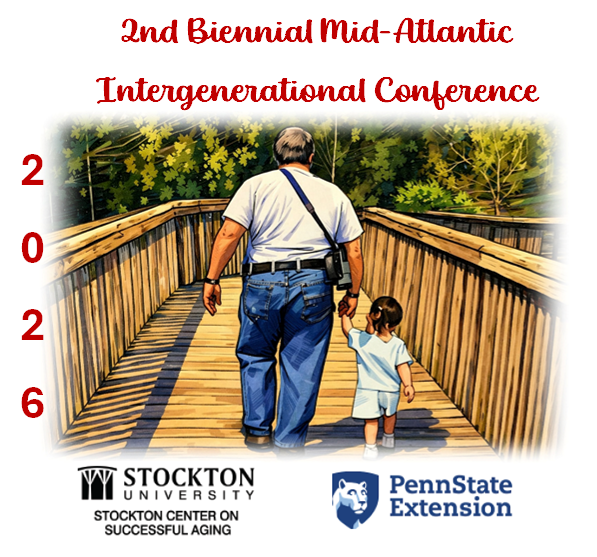
The 2nd Biennial Mid-Atlantic Intergenerational Conference: Intergenerational Approaches for Living, Learning & Growing
Stockton University
3711 Atlantic Avenue, Atlantic City, NJ 08401
June 3 - 5, 2026
The 2026 conference is sponsored by the Stockton Center on Successful Aging
in partnership with Penn State University.
Join colleagues and meet new friends from across the region to share ideas, successes and challenges in creating intergenerational opportunities for all.
The 2026 conference will include workshops, panel discussions, round tables, poster sessions and individual presentations.
We'll also make time for intergenerational fun on the beautiful Stockton University campus in Atlantic City, New Jersey and host site visits to organizations that strengthen intergenerational connections.
Sponsors/ Donations/ Gifts
Platinum Sponsor - $10,000: Includes up to 3 complimentary registrations and full-page recognition in the Conference Booklet
Gold Sponsor - $5,000: Includes up to 2 complimentary registrations and half-page recognition in the Conference Booklet
Silver Sponsor - $2,500: Includes 1 complimentary registration and quarter-page recognition in the Conference Booklet
To make a contribution, click the preferred level above.
For more information on Sponsors/Donations/Gifts, please contact Matt Kaplan, Ph.D. at msk15@psu.edu
Two Conference Housing Options
$86.99 plus tax per night
2831 Boardwalk
Atlantic City, NJ 08401
To call for room reservations -
888-516-2215
(8 a.m. - 2 a.m. EST, 7 days a week)
Group code: ST06MA6
***All callers will be asked for this code but can also book by saying ** Mid-Atlantic Intergenerational Conference.**
- About a mile from the conference
- Coffeemakers in each room
- Basic in-room Wifi for two devices per day
- $5 credit per stay toward self-parking
- Fitness Center Access for two per day at each property; no lockers or shower access
- The current parking fee per day is $35.00 for self-parking or $50.00 for valet parking for all overnight hotel guests however is subject to change.

Accepting Poster Presentation Proposals through April 15, 2026
*****************
Conference Registration
Conference Registration Rate: $365
Student Registration Rate: $150
Registration includes pre-conference events on June 3, 2026
New This Year!
Intergenerational Community Design Competition
This inaugural design competition aims to spark creativity and innovation in designing spaces that foster intergenerational community connection and inclusion. This team competition invites innovative designs for shared spaces that promote intergenerational living, learning, caregiving, wellness, and connection.
Submission CLOSED
A pre-conference event will be held to recognize all competition submissions.
Scheduled Programs
(Social Work CEs pending)
Beginning 10:30 a.m.
Conference Registration and Information Tables
11:30 a.m. – 1 p.m.
Boxed lunches available in the Fannie Lou Hamer Event Room
12:30 – 2:00 p.m. 1st Pre-Conference
Visit to MudGirls Studios, a nonprofit pottery center that empowers disadvantaged women and fosters intergenerational community engagement.
2:15 – 3:30 p.m. 2nd Pre-Conference
Intergenerational Community Design Competition
This inaugural design competition aims to spark creativity and innovation in designing spaces that foster intergenerational community connection and inclusion. This team competition invites innovative designs for shared spaces that promote intergenerational living, learning, caregiving, wellness, and connection.
5:00 pm: Fannie Lou Hamer Event Room
Intergenerational Harmony with the New Jersey Intergenerational Orchestra
Opening Celebration Intergenerational Harmony with the New Jersey Intergenerational Orchestra has been bridging the generations through music for over 30 years. This session will include a performance with musicians of all ages and discussing the personal impact of intergenerational music-making.
6:00 p.m. Fannie Lou Hamer Event Room
Opening Keynote: Forty Years United: Building Bridges that Last by Generations United's new Executive Director, Kristen Kiefer
For four decades, Generations United has championed the bold idea that we are stronger together across every age and every stage. This keynote celebrates the milestones of the intergenerational movement, honors the partnerships and policies that shaped its success, and explores what comes next. Join us as we look ahead with urgency and optimism, advancing a future where generations are not divided, but connected by purpose, compassion, and shared power.
7:00 – 9:00 pm Networking Cocktail Hour
9:00 – 10:00 a.m. Fannie Lou Hamer Event Room
Arts, Culture, and Recreation: Includes artistic expression, cultural values and rituals, language, hobbies, and leisure activities
Rhythm & Nature: A Meaningful Intergenerational Activity to Promote Connection, Confidence, and Self-Expression
Emily S Ihara & Michelle D. Hand
WORKSHOP
This interactive workshop highlights Rhythm & Nature (R&N), a modifiable drumming and garden-based program designed to promote connection, confidence, and self-expression among older adults. Creative arts interventions have been shown to engage college students with older adults, promoting shared learning. As social work educators and gerontologists, we aim to develop mutually beneficial, evidence-informed programs that support both older and emerging adults while challenging societal ageism.
R&N was first implemented with older people living with disabilities, a population with elevated risks for trauma across the lifespan, owing to ableism and intersectional discrimination. Opportunities for agency, prosocial engagement, and connection remain limited for this group, underscoring the need for innovative intergenerational models.
R&N consisted of eight 90-minute sessions for two groups in an adult day setting. Two college students contributed to facilitation and cultivated meaningful interactions with participants. All sessions were audio- and video-recorded, transcribed, and thematically analyzed, and staff focus groups were conducted after each cycle.
Six themes were identified: community and active prosocial engagement; safe spaces for sharing memories, processing, and reminiscing; fun, laughter, and joy; autonomy, voice, and creativity; multisensory experiences and learning; and skill development, affirmations, and confidence. Staff reported greater participant engagement during R&N than other programming, and students highlighted R&N’s potential for reciprocal intergenerational connection and empathy.
R&N offers a promising intergenerational model for bridging age groups, promoting mutual understanding, and creating inclusive spaces for wellness. This workshop will provide benefits of drumming and nature-based activities, discuss intergenerational implications, and invite participants to experience R&N activities.
9:00 – 10:00 a.m. Room 310
Health & Wellness: Includes physical, psychological, and spiritual dimensions of health and wellbeing
Intergenerational Programs as Pathways to Youth Skills and Positive Attitudes
Sunny Mathew, Manoj P Pardasani, Katie A Cardwell, & Stephanie Roque
This paper uses mixed-method data to examine youth experiences in an intergenerational program implemented between 2022 and 2025 across three community organizations piloted by United Neighborhood Houses (UNH).
Survey findings indicate that youth gained multiple competencies, including interpersonal and social skills, intergenerational understanding, leadership and responsibility skills, and creative and problem-solving abilities. Youth also reported more positive attitudes toward older adults and stronger community-oriented perspectives. Higher program satisfaction was associated with greater interpersonal skills and more positive attitudes toward older adults.
Focus group findings reinforced these results, with youth describing increased confidence, better communication with older adults, and a deeper appreciation for intergenerational relationships. They also offered recommendations to strengthen future program activities.
This intergenerational program is notable for leveraging existing community infrastructure and the capabilities of both youth and older adults, requiring minimal additional resources. Each site implemented its own mix of activities such as cooking and art classes, chess, mobile technology lessons, museum visits, and holiday celebrations demonstrating a flexible and easily replicable model with a clear goal of connecting generations. This presentation will also incorporate interactive activities and discussions so that participants can explore approaches and techniques for building meaningful projects in an intergenerational setting.
9:00 – 10:00 a.m. Room 311
Health & Wellness: Includes physical, psychological, and spiritual dimensions of health and wellbeing
Pushing Back Against Ageism: An Intergenerational Student Project Model for Real-World Action
Elizabeth J Bergman
This roundtable showcases an innovative pedagogical approach where undergraduate students in an introductory aging course identified and addressed real instances of ageism through semester-long capstone projects. Students worked either on intergenerational teams or incorporated intergenerational input to develop and implement concrete 'pushback' strategies targeting ageism in various contexts—from campus accessibility issues to media representation.
The course integrated two distinct project models. In Fall 2024, students formed small intergenerational groups with older adult community partners, reading Becca Levy's Breaking the Age Code together and collaboratively designing anti-ageism campaigns through five structured Zoom discussions. In Fall 2025, students developed individual or small-group projects, incorporating perspectives from at least two different generations through interviews and feedback sessions before implementing their initiatives.
Projects ranged from improving digital accessibility for older adults, challenging stereotypical media portrayals, addressing campus infrastructure barriers, and developing educational resources and social media campaigns. The intergenerational collaboration proved essential—different generational perspectives enriched both the analysis of ageism and the strategies developed to address it.
Attendees will gain practical strategies for implementing similar projects in their own educational settings, including frameworks for facilitating intergenerational collaboration, assessment rubrics, and techniques for supporting students in moving from identifying ageism to taking concrete action. Participants will examine student work examples, discuss challenges encountered, and explore adaptations for various institutional contexts and course levels.
9:00 – 10:00 a.m. Greenberg Room 313
Community Planning & Placemaking: Includes environmental design, intergenerational shared sites, and intergenerational community planning
Connected Across Generations: Technology Expectations & Intergenerational Living in Senior Communities
Joe Velderman, Kenna Embree, & Melia Black
Today’s senior living communities are welcoming residents with increasingly sophisticated digital lifestyles; smart devices, streaming, wearables, and voice assistants are now part of daily living. Alongside this shift, intergenerational living models are emerging as powerful tools for supporting technology adoption, reducing isolation, and strengthening community
life. At Vincentian Terrace Place, undergraduate students live onsite and help residents navigate engagement apps, smart home tools, and everyday device challenges, creating meaningful cross-generational relationships while easing staff workload.
This session will explore how blending intuitive technology with intergenerational engagement supports resident confidence, boosts participation, and prepares communities for even more tech-savvy generations. Attendees will learn strategies to foster digital literacy, design sustainable support models, and harness intergenerational partnerships to build more connected, equitable, and future-ready environments.
10:15 - 11:15 a.m. Fannie Lou Hamer Event Room
Grandfamilies and Kinship Care
Empowering Kinship Caregivers: Resources, Resilience, and Community Support in NJ
Jory Catalpa, Heather Saraceni, Lindsay Scott, & Kin Caregiver--to be confirmed
The NJ Kinship Navigator Program (KNP) is the statewide resource for kinship caregivers—including grandparents, relatives, and trusted family friends—in informal caregiving arrangements, when biological parents cannot care for their children. KNP offers limited financial assistance, legal navigation, and warm connections to community supports. KNP helps to strengthen family bonds, preserve cultural continuity, and reduce trauma —while promoting resilience and long-term well-being for caregivers and children.
As part of its support to kin families, the KNP program includes quarterly caregiver support events, intended to support and enhance kin families’ protective factors (Parental Resilience, Social Connections, Concrete Support in Times of Need, Knowledge of Parenting and Child Development, and Social and Emotional Competence of Children). These events often include other community providers, such as Family Success Centers (FSCs). The DCF Office of Family Support Services and the Office of Applied Research and Evaluation began an evaluation to understand the impact of these events and collaborations to identify opportunities to tailor the activities around the needs of kin families. Phase 1 of the evaluation involved event observations, caregiver interviews, and feedback themes which are being channeled into enhancements for future events. Phase 2 of the research will focus on the impact of these enhancements and community collaborations on caregivers’ resilience, social connections, and ability to care for themselves and their kin children.
The panel will include staff from the program (KNP, FSC) and the research team as well as a kin caregiver. Panel attendees will learn about tools and insights to support kinship families utilizing caregiver voice, empowerment, resilience, and community resources.
10:15 – 11:15 a.m. Room 310
Education & Lifelong Learning
Reinventing Narratives Together: Intergenerational Approaches in Mexico and the United States
Ana Patricia Aguilera Hermida, Sanjuana Gómez Mendoza,& Janet Ríos Cairo
In this session, we will present three intergenerational programs—two from Mexico and one from the United States—that worked with populations of low socioeconomic status. We will explore how intergenerational interaction helped these communities create healthier self-narratives.
Drawing on systemic approaches and positive psychology, this presentation will demonstrate how dominant narratives can be challenged through interviews conducted by university students, and how a collaborative, non-blaming approach empowers older adults to see themselves from a healthier and more positive perspective.
We will also discuss how these interactions benefit young adults, allowing them to learn from older adults who have faced significant life challenges and are not in privileged situations.
By the end of the session, attendees will gain practical insights and key elements to integrate into their own intergenerational programs, helping older adults reinvent their stories and fostering mutual growth across generations.
10:15 - 11:15 a.m. Greenberg Room 313
Education & Lifelong Learning
From Partnership to Practice: Using Community-Based Participatory Research to Design an Effective Intergenerational 4-H Program
Jill Juris & Shannon Jarrott
BRIDGE2Health (B2H) is an intergenerational mentoring program designed to improve life skills and social connections among teens and older adults. We will share experiences using a community-based participatory research (CBPR) approach as an iterative cycle of creating, evaluating, and communicating to develop an intergenerational mentoring 4-H manual. Aligned with CBPR methods, community partners were involved at every step of the research process. We communicated constantly across two states, engaged Extension staff, community partners, and older and younger participants to shape programming. We will share lessons learned from our collaborative efforts to gather, interpret, and share programming results, as well as quantitative and qualitative results across multiple participant cohorts. Measures focused on life skills and social support outcomes for teen and adult participants. Mixed-modeling analyses were conducted to examine changes in outcomes for teen and adult mentors from pre-test to post-test. Results indicated statistically significant differences with improved scores of social connections and life skills among both age groups. Qualitative data from annual focus group interviews contextualize quantitative findings by age group, state, and cohort. Finally, we will share how our CBPR strategies led to the development and piloting of a standardized intergenerational mentoring facilitator manual guided by theory and the 4-H Thriving Model. Through an iterative process involving mentor input, informal and formal staff reflection, and peer review, the facilitator guide includes background information, resources, and directions to implement 10 sessions. Our presentation highlights the effectiveness of long-term partnerships that leverage intergenerational strategies to address community needs and opportunities.
11:30 a.m.- 12:30 p.m. Fannie Lou Hamer Event Room
Arts, Culture, and Recreation: Includes artistic expression, cultural values and rituals, language, hobbies, and leisure activities
GENuine Connections: A Virtual Cohort Based Pedagogy
Karen Jarmon
GENuine Connections®, an evidence-informed, intergenerational program, brings together groups of adults ages 65+ and high school students as partners in a vibrant, virtual community. Developed by DOROT, the program alleviates social isolation, promotes meaningful relationships, and builds social capital across generations. Participants engage in multi-session workshops facilitated by trained Teaching Artists, choosing from a wide range of topics including discussion groups, story circles, brain games, chess, and more. Over the past three years, 480 older adults and 1000 teens participated, with many returning for additional workshops. Everyone is a volunteer regardless of age, both giving and receiving, leading to discovery of new and shared perspectives.
In this session we will present our program model that engages volunteers ages 65+ and teens through intentional design and inclusive facilitation that fosters strong intergenerational relationships. We will share core program components such as creating community agreements and establishing programmatic rituals. Attendees will explore facilitation strategies that balance structure with elevating participant voices, using the main room to cultivate belonging and breakout rooms for intimate dialogue. The session will also cover methods for evaluating program impact.
Our flexible pedagogical approach and customized materials can enhance existing programs or serve as a framework for senior-facing organizations, schools, and youth organizations seeking to bring the generations together for mutually beneficial experiences.
A panel of participants (in-person or via Zoom) will share testimonials about program impact and answer questions. Attendees will experience GENuine Connections activities and learn about outcomes in alleviating social isolation and building transformative connections.
11:30 a.m. - 12:30 p.m. Room 310
Arts, Culture, and Recreation: Includes artistic expression, cultural values and rituals, language, hobbies, and leisure activities
Learning HOW to Age™: An Experiential, Intergenerational Program—Skills for Every Generation
Angie D Dortch
Aging is a natural part of life, offering opportunities for learning, growth, and connection at every stage. Learning HOW to Age™ is an experiential, intergenerational program designed to cultivate these opportunities through play, skill-building, and social engagement. Participants move through exercises and games adapted from acting, movement, and voice training, promoting cognitive, physical, and kinesthetic development. While activities are tailored to individual ability levels, the core rules remain consistent, allowing flexibility without compromising structure. Small group formats (1:10 facilitator-to-participant ratio) foster camaraderie, collaboration, and iterative learning, enabling games to evolve based on the group’s needs. Key areas of focus include mental flexibility, physical perception, and fine-tuned kinesthetic awareness. Objective data from a two-year program with independently living older adults demonstrated over 40% improvement across these domains.
Expanding the program to an intergenerational setting magnifies these benefits. Younger participants contribute energy and fresh perspectives, while older participants offer experience and mentorship. Importantly, learning is reciprocal: younger participants gain wisdom and guidance, while older participants benefit from fresh perspectives and energy, creating a cycle of shared growth.The resulting social connections enhance engagement, motivation, and mutual growth, demonstrating the power of shared learning across generations.
This session will present the principles of Learning HOW to Age™ , provide sample exercises, and review program outcomes. Attendees will learn practical strategies to design adaptable, engaging, and socially rich intergenerational programs that promote lifelong learning, resilience, and well-being. By combining structured skill-building with intergenerational connection, this approach fosters personal growth, strengthens social bonds, and creates meaningful opportunities for thriving across the lifespan.
11:30 a.m. - 12:30 p.m. Room 311
Grandfamilies and Kinship Care
From Surviving to Thriving in Kinship Care
Cynthia Pollich, Rozalia Horvath, & Darlene Sansone
Kinship caregivers often step into their roles during times of crisis, supporting children who have experienced significant trauma and loss. This session will explore how trauma impacts child development and family dynamics, and provide practical, trauma-informed strategies to help caregivers move from a state of survival to one of stability and growth. Participants will learn how to create safe, predictable environments, strengthen attachment, and build resilience for both children and themselves. Through interactive discussion and real-world examples, this session empowers caregivers to transform challenges into opportunities for healing and thriving.
11:30 a.m. - 12:30 p.m. Greenberg Room 313
Health & Wellness: Includes physical, psychological, and spiritual dimensions of health and wellbeing
Building Bridges Across Generations: Lessons From Generations Connect’s Intergenerational Community Initiatives
Katie A Cardwell, Sunny Mathew, Stephanie Roque, & Manoj P Pardasani
This workshop is built on the experiences learned through Generations Connect, an initiative of United Neighborhood Houses (UNH). Between 2022 and 2025, three settlement houses participated in this program with approximately 100 older adult volunteers and 100 youth volunteers: older adults ranging in age from 60 to 94 and youth ranging from 8 to 24. Among both groups, females were the primary participants (70%). The older adults represent a truly global world, having been born across multiple continents. This workshop shares the experiences learned through this project, drawing on pre- and post-surveys of older adults, post-surveys of youth, and focus groups with older adults, youth, and staff across the three settlement houses.
This workshop will be unique as it includes findings from the survey and focus groups of program participants, focus groups with program staff, and case studies with settlement house staff. This data will provide deeper insight into the program’s effect on social connection and the mutual gains experienced by both generations in personal and emotional terms.
This pilot program revealed important physical, mental, and social health benefits for older adults, as well as significant interpersonal, prosocial, and leadership skills gained by youth through their participation. The workshop will also present insights learned by staff during program implementation. Overall, this workshop seeks to highlight the unique stories of growth and impact emerging from these organizations and to share tools and resources developed through the project resources that are easily replicable in other community settings.
12:30 – 1:30 p.m. Fannie Lou Hamer Event Room
Lunch Panel
For All Ages, With All Ages: Integrating Intergenerational Principles and Practices With Age-Friendly Initiatives
Cassandra Masters, Christine Happel, Karen C.Rose, & Cathy Bollinger
The age-friendly framework emphasizes creating places that are not only supportive of older adults, but also more livable and inclusive for people of all ages. With intentional planning, age-friendly communities create opportunities for intergenerational connection, too. The concept of “age-friendly” has taken off exponentially around the world, reflecting our global demographic shifts and the need to rethink how our communities are built to foster greater age inclusion. Led by AARP Livable Communities in the U.S., the Age-Friendly
Communities and States network recently reached a major milestone, with more than 1,000 communities and 14 states formally joining the network.
This engaging panel discussion will explore how age-friendly initiatives across three states (New Jersey, Ohio, and Pennsylvania) are integrating intergenerational principles and practices into their work. Attendees will gain replicable ideas that can be adapted to their own communities, whether or not they are formally part of the Age-Friendly network.
Initiatives featured in the session include the Age-Friendly Innovation Center at The Ohio State University and Age-Friendly Columbus and Franklin County; Age-Friendly Greater Pittsburgh; Age-Friendly York County (PA); and Age-Friendly University efforts at Stockton University. Panelists are situated within universities, community foundations and nonprofit organizations, offering unique insights across sectors.
1:45 - 2:45 p.m. Fannie Lou Hamer Event Room
Education & Lifelong Learning
Reflections from the Psychology of Race and Racism Book Club: A Pilot Intergenerational Conversation
Kaite Yang & Students: Claire (Cal) Steacker, Makenna Marrella,& Katelyn Longo
Intergenerational dialogue can serve as a powerful connector of lived experiences, history, and imaginations of the future (Fletcher, 2007; Steward & McDevitt, 2019). Through active listening, empathy, and perspective-taking, mixed-age conversation groups can broaden participants’ understanding of change, stability, and possibility regarding social problems and social justice. This panel explores reflections and feedback from participants of a pilot intergenerational book club as part of a university Psychology of Race and Racism class. The book club involved small group discussion sessions centered on social psychologist Jennifer Eberhardt’s award-winning book, Biased: Uncovering the Hidden Prejudice That Shapes What We See, Think, and Do. Each discussion group included older adult community members connected to the Stockton Center on Successful Aging (SCOSA) and students in the Psychology of Race and Racism. A subset of students moderated each discussion group, which were organized around fostering conversations about each chapter. These conversations serve as openings into discussion of contemporary and historical racism in the United States. We consider reflections from these dialogues within the simultaneous contexts of age separation, racial bias and segregation, and age-related prejudice.
1:45 – 2:45 p.m. Room 310
Education & Lifelong Learning
Non-Traditional Students’ Lived Experiences on Campus: Favorite Places andReflections on Their Journey and Sense of Belonging
Elke Altenburger & Su-Chang Russell
As the United States approaches a demographic cliff marked by declining numbers of traditional college-age young adults, universities anticipate enrollment losses and have increasingly expanded recruitment efforts to include older, part-time, and otherwise nontraditional students. However, few socio-physical college environments have been intentionally envisioned or designed to support these increasingly diverse and intergenerational campus communities. To examine the environmental fit of the college campus experienced by non-traditional students at a public university in the U.S. Midwest, we conducted walking interviews with 19 non-traditional students ranging in age from 26 to 80. Our recruitment strategy combined faculty recommendations of non-traditional students and a mass email inviting enrolled students who self-identified as “nontraditional” to participate. We interviewed students belonging to a wide range of majors such as the Fine Arts, Construction Management, Business, Nursing, Criminal Justice, Political Science, English, and Interior Design. Both collaborators analyzed the interview transcripts in a constant comparison approach, establishing trustworthiness through frequent peer debriefing. Our inductive analysis revealed two primary themes: (1) nontraditional students’ reflections on their sense of belonging in favored campus spaces, including both traditional classrooms and unconventional academic environments; and (2) participants’ pathways (back) to college, their distinctive positions within the university’s social context, and their concrete visions for life after graduation. We conclude by discussing implications for college programming, intergenerational campus design, and higher education policies aimed at supporting the success and well-being of nontraditional students.
1:45- 2:45 p.m. Greenberg Room 313
Education & Lifelong Learning; Arts, Culture, Recreation; Health & Wellness (mental and spiritual wellbeing, sharing community space)
Different Stages: New Perspectives and Possibilities through Intergenerational Storytelling
Mckenzie L Wilson
This interactive session draws from SilverKite Community Arts’s Intergenerational Theatre Company (ITC), a devised theatre program that brings together a diverse ensemble of 3-7 actors from different generations to create original performances rooted in their life stories. Since 2013, ITC has produced 11 shows touring schools, senior centers, libraries, and community venues, inviting audiences to reflect, ask questions, and share their own stories. Through this exchange, ITC fosters empathy, challenges stereotypes, and builds meaningful community connections.
In the session, participants will experience a live demonstration of ITC’s story-based creative process, which identifies, prepares, and stages ensemble members’ personal stories to resonate across age groups. Using improvisation techniques and story-sharing prompts, participants will share stories to stage in a collaborative scene-building activity. Participants will then step into staged moments, experimenting with new perspectives and outcomes. This process emphasizes ensemble-building, creative expression, and trust-based collaboration.
Through this experience, participants will explore how theatre can examine narratives shaped by generational culture, family, and social norms, and how these different narratives impact identities and interactions today. The exercise models how theatre can be a tool for empathy, dialogue, and thoughtful problem-solving.
The session concludes with a reflective discussion on ITC’s artistic and social impact, sharing insights from over a decade of performances that strengthened community connection and inspired change.
Attendees will leave with practical exercises, facilitation strategies, and a deeper understanding of how intergenerational theatre can spark connection, challenge assumptions, and support meaningful engagement across generations.
1:45 – 2:45 p.m. Room 311
Grandfamilies and Kinship Care
Caring for Our Kin: Supporting Kinship Families Through Education, Connection, and Healing
Jacqueline Amor-Zitzelberger, Darlene Sansone, & Cynthia Pollich
Kinship families face unique challenges, including complex family dynamics, custody issues, and financial and emotional stress. Caring for Our Kin is a research-informed
curriculum designed to strengthen these families through education, peer support, and practical tools. Each module addresses specific issues kinship caregivers encounter, offering strategies to promote resilience and well-being.
This session begins with a brief overview of the curriculum and shares evaluation results from our pilot program. Attendees will then engage in an interactive sample lesson on grief, exploring lesser-known types of grief that affect both children and adults in kinship families. The module on grief and loss covers anticipatory grief, disenfranchised grief, and ambiguous loss, concepts often overlooked yet deeply impactful. We will review these grief types, discuss their effects on emotional health, and share practical coping strategies and activities caregivers can use at home. Participants will experience an example activity and join discussions on grief and loss.
This session is ideal for two audiences: professionals and organizations seeking evidence-informed approaches to support kinship families, as well as kinship caregivers themselves. By the end, professionals will understand how Caring for Our Kin can be adapted for diverse settings and learn how it fosters sustainable intergenerational support networks. They will leave with replicable tools, including discussion prompts, activity ideas, and guidance for facilitating support groups. Kinship caregivers will benefit from modeled strategies and hands-on activities designed to strengthen family connections and promote healing.
Poster Sessions June 4th
4:40- 5:30 p.m.
Bridging Generations: Mitigating the Consequences of Age Segregation Through Structured Intergenerational Dialogue
Education & Lifelong Learning
Adele Ryono, Neda Moinolmolki, & Arielle Galinsky
Increasing age segregation in the United States presents a significant public health challenge. Age segregation is linked to ageism, social isolation, and worse health outcomes. Solutions that facilitate intergenerational contact are critical.
We present two scalable, community-based programs designed to reduce age segregation through structured dialogue between middle and high school students and older adults. Grounded in oral history methodology, Intergroup Contact Theory, and Reminiscence Therapy, these models use guided dialogue to foster empathy, improve understanding, and encourage interaction across generations.
reGenerations is a nonprofit program in which middle school students attend workshops, record oral history conversations with older adults, and co-write profiles based on their conversations. Over 100 students nationwide have participated. Talk Across Time, a California-based countywide campaign to reduce social isolation, asks high school students to record a single conversation with an older adult. The initiative was piloted with 20 dyads. Both programs preserve participants’ reflections in a digital archive.
Preliminary qualitative findings reveal that 69% of participants reported experiencing more meaningful conversations compared to their typical interactions, and 71% expressed a greater understanding of other generations. Thematic oral history content analysis indicated that the discussions captured unique perspectives and wisdom applicable across generations.
This poster session will summarize the methods, results, and outcomes of these intergenerational programs and provide a framework for other communities and educators to replicate these initiatives to combat age segregation and foster intergenerational dialogue.
The Long-term Relationship Between Custodial Grandparents and Their Grandchildren: The Health Impact for Both Generations
Grandfamilies and Kinship Care
Catherine J. Tompkins & Danielle M. Brooks
"Background: Custodial grandparents make up most relatives raising non-biological children, yet little is known about how long-term family dynamics within these grandfamilies affect healthy child development, grandparent health, and life-long bonds. This study aims to deepen our understanding of the emotional and relational complexities within grandparent-headed households. It also examines grandparent-grandchild relationships and health trajectories over time, drawing on insights from more than 20 adult grandchildren.
Methods: Participants included adult grandchildren (aged 18 and older) who were raised by grandparents, recruited through purposive and snowball sampling. Data were analyzed using classic grounded theory principles. An open-ended primary question invited participants to reflect on their relationships with their grandparents from childhood through young adulthood, with follow-up questions exploring situational, relational and emotional complexities and health conditions (both mental and physical). One-hour Zoom interviews were conducted, recorded, and independently coded by two researchers using memoing and constant comparative analysis.
Results: Key themes emerged, including appreciation, transitions, relationship strain, and emotional divergence. One participant, who now cares for the grandmother who raised her, shared: “It wasn’t always the easiest relationship. It’s gotten easier as an adult
but my grandmother can be very hard to take care of sometimes. She’s very stubborn.”
Conclusions: This study highlights the intricate relational and emotional challenges within grandfamilies and the potential for adult grandchildren to assume caregiving roles when custodial grandparents become frail. This raises a crucial public health question: Who will care for aging custodial grandparents if their adult grandchildren are unable or unwilling to step up?
Affective Outcomes of Intergenerational Dance Participation: A Real-Time Pre-Post Study
Arts, Culture, and Recreation: Includes artistic expression, cultural values and rituals, language, hobbies, and leisure activities
Elizabeth J Bergman, Lola I Larsen, & Seth T Michaud
Intergenerational programming offers documented benefits for both older adults and college students, including enhanced emotional well-being, reduced ageism, and strengthened social connections. This study assessed real-time affective states of college students and older adults as they entered and exited an intergenerational social dance event. Using a brief emoji-based measure, we found significant improvements in self-reported affect for both age groups following participation in the Harvest Moon Dance, an intergenerational social event held at a senior living community. Results suggest that even single intergenerational encounters can produce measurable, positive affective outcomes, supporting the value of creating opportunities for cross-generational social engagement.
Empowering and Organizing Generations for Impact
Community Planning & Placemaking: Includes environmental design, intergenerational shared sites, and intergenerational community planning
Wanda L Schlumpf
Traditional aging narratives emphasize decline and dependency, silencing older adults' contributions while isolating younger generations from intergenerational wisdom. The Legacy Project, Inc.'s Intergenerational Changemakers Fellowship operationalizes OAGE 2026's vision by positioning older adults (65+) and young adults (18-24) as equal partners in storytelling and civic action—not as mentors and mentees, but as co-leaders with complementary strengths.
This poster will present outcomes from our inaugural 6-month fellowship (November 2025–April 2026), which brought together paired older and younger adult participants across six U.S. cities to complete two core deliverables: (1) collaborative storytelling culminating in a professionally published book, and (2) community micro-initiatives addressing issues of mutual concern. To complete the project and emphasize that both generations bring valuable expertise, each pair received a $1,000 stipend with support from The Eisner Foundation.
We will present pre/post-fellowship survey data measuring changes in sense of purpose, civic engagement, community connection, and attitudes toward intergenerational relationships across both age cohorts. The poster will showcase the collaboratively authored book and analyze any recurring themes, as well as highlight the community micro-initiatives from each participating city.
This work demonstrates that when provided with equitable resources and a guided partnership structure, intergenerational collaboration can challenge ageist assumptions, activate civic leadership, and produce tangible community impacts.
Aging Well Together: A Holistic Approach to Body, Mind, and Wellness
Health & Wellness: Includes physical, psychological, and spiritual dimensions of health and wellbeing
Kerstin R Maguire
In this presentation, I will explore the themes of the PBS documentary Lives Well Lived by Sky Bergman and how they inform our understanding of successful aging. The documentary highlights the wisdom of aging and emphasizes the importance of living a fulfilling life, and building on these insights, I will present an intergenerational program that connects college students with older adults to explore holistic health topics, such as heart health, fitness, nutrition, and mental wellness. The program promotes meaningful connections and offers hands-on activities to help participants develop personalized strategies for aging well. Attendees will gain insight into how this model fosters both health education and intergenerational understanding, while offering practical ideas for implementing similar initiatives in their own communities.
Intergenerational Learning Study: Perceptions from Today's Workers
Multigenerational Workforce: Includes multi-age teams, knowledge transfer (policies and practices), mentoring, and encore careers
Renata Scott
Workplace learning is a crucial need given the complexities of today’s workforce with four generations at work, an everchanging labor market, and the need for a skilled workforce to meet demands. Collaborative learning becomes an essential foundation to address these complexities as it benefits not only the contributors, but also the organizations that workers are a part of. Intergenerational learning is a way to leverage the mutual exchange of knowledge and information from individuals that are represented across different generations (Gerpott et al., 2017). This can come in the form of shadowing, workshops, or even informal opportunities for colleagues across age groups to engage in meaningful activities to learn and support one another.
Leveraging intergenerational learning to transfer explicit and tacit knowledge can be a crucial benefit and is referred to as “leaving a trail”, which is a benefit to organizations for retaining knowledge and working practices (Rupcic, 2018). Research reflecting how performance grows with age and years of experience shows that various forms of learning are an investment for older workers (Aaltio et al., 2017). Likewise, research by Racolta-Paina & Irini (2021) demonstrates that adults entering the workforce possess a strong desire for ongoing development, mentorship, and positive relationships. These findings for various generations reflect the need for intergenerational learning.
9:00 – 10:00 a.m. Fannie Lou Hamer Events Room
Health & Wellness: Includes physical, psychological, and spiritual dimensions of health and wellbeing
Strengthening Families and Communities through Connection: An Introduction to Be Strong Families Parent Cafes
Sarah Jankowski, Deepa Srinivasavaradan, Cindy Weber, & Parent Leader--to be determined
This session introduces participants to Be Strong Families’ Parent Café model, a nationally recognized, evidence-informed framework designed to strengthen families by building protective factors through meaningful, peer-led conversations. Attendees will gain a clear understanding of the Parent Café approach—its guiding principles, its focus on the five Strengthening Families Protective Factors, and how these elements work together to create transformative, family-centered dialogue.
The presentation/roundtable session will highlight how Parent Cafés are currently being implemented across New Jersey, including examples from community organizations, early childhood programs, and family support networks that use the model to deepen engagement, elevate parent voice, and foster strong community relationships.
Participants will then experience a micro-Parent Café, giving them a firsthand look at the power of structured conversation, reflective questions, and trauma-informed engagement. This interactive component will model the core elements of the café process, including the role of table hosts, the use of meaningful prompts, and practices that create psychological safety.
Throughout the session, attendees will be challenged to think about how they can incorporate parent cafes with their work with individuals, families, and communities.
9:00 – 10:00 a.m. Room 310
Health & Wellness: Includes physical, psychological, and spiritual dimensions of health and wellbeing
GENerating Meaning, Tools for Intergenerational Connection
Cassandra Masters & Christine Happel
Regions across the Mid-Atlantic are experiencing a significant shift in demographics. We are growing older, rapidly. Allegheny County, for example, is the second oldest county in the U.S. with nearly 21% of residents ages 65+, compared to 18% nationally. AFGP understands this demographic shift as an opportunity—one that opens the door for stronger intergenerational connection.
Age-Friendly Greater Pittsburgh and Age-Friendly Columbus and Franklin County have led various efforts to educate community members and professionals on the negative impacts of ageism and the power of intergenerational connection. Ageism refers to how we think, feel and act towards ourselves and others based on age. Ageism intersects with other forms of discrimination (e.g., racism, homophobia, sexism), and is linked to several negative health outcomes, including earlier death by more than 7 years. Ageism crosses all demographic backgrounds. Discrimination and negative stereotypes about LGBTQ+ older adults can lead to decreased rates of participation in civic and social events. Research has demonstrated negative impacts of ageism on LGBTQ+ older adults, including poorer mental health and well-being (Lyons, 2021). Age stereotypes are internalized as early as three years old, and perpetuated across the lifespan. Ageism harms our health, and holds us back from reaching our fullest potential within ourselves and our communities.
In this session, participants will gain a better understanding of how ageism shows up in our lives, and how to better advocate for intergenerational practices that counter ageism. Participants will engage in small group discussions about how ageism shows up within ourselves, interpersonally, and in our systems. These themes will be illuminated through projects AFGP and AFCFC has implemented through their age-friendly initiatives, such as education/media campaigns about ageism and tangible tools including LGBTQ+ intergenerational conversation cards and an Age-Inclusive Photo Bank.
Age-Friendly Greater Pittsburgh (AFGP) is dedicated to making Southwestern Pennsylvania a better place to grow up and grow old. AFGP brings generations together to reimagine how our neighborhoods are built and to advance equity through advocacy, education and innovation. Age-Friendly Columbus and Franklin County (AFCFC) is a program of The Ohio State University College of Social Work working to improve social, built and service environments that support livability for people of all ages and abilities.
Through small group discussion, participants will be able to identify ageism—discrimination towards ourselves or others based on age—and how it might manifest in intergenerational interactions.
Together, participants will brainstorm methods of combatting ageism in intergenerational contexts, leaving the session feeling equipped to call out ageism and call people in to our intergenerational movement
Participants will gain practical tools and program ideas they can take back to their communities to inspire intergenerational action.
9:00 – 10:00 a.m. Room 311
Education & Lifelong Learning
Gen2Gen: Developing Compassion, Connection and Community Through an Intergenerational Hospice Volunteer Program
Emily Carver & Erin O'Hara
Gen2Gen, also known as Generation-to-Generation, is a unique intergenerational volunteer program at Gilchrist that pairs high school students (ages 16-18) with experienced adult mentors to bring companionship, connection and comfort to older adults receiving hospice care. As Maryland’s leading nonprofit provider of serious illness and end-of-life services, Gilchrist offers geriatric, palliative, hospice and grief support to help patients live every moment to its fullest. Gen2Gen adds a special dimension to this mission by ultimately being a part of a three-generation model of care, bringing together the energy of youth, the wisdom of experience and the resilience of our elders. This session will explore how structured intergenerational engagement in end-of-life care fosters emotional growth among youth, improves the well-being and reduces loneliness among older adults and builds stronger, more compassionate community ties. Participants will learn the core elements of the Gen2Gen program, including training, mentoring, communication strategies and visit best practices. Also gaining replicable tools to help organizations develop or expand their own intergenerational initiatives. Through real-world examples, this presentation demonstrates how Gen2Gen bridges generational divides, fosters empathy, preserves life stories and creates meaningful connections that benefit volunteers, families and communities.
10:15- 11:15 a.m. Fannie Lou Hamer Event Room
Community Planning & Placemaking: Includes environmental design, intergenerational shared sites, and intergenerational community planning
Building Organic Intergenerational Programs: Case Studies from Two NYC Settlement Houses
Emma Pollack, Alano Baez, & Nancy Alberts
By exploring two New York City settlement houses, this presentation will focus on building organic intergenerational programming through unique community-centered pillars. Riverdale Neighborhood House and Hamilton-Madison House have both transformed their community programs using an intergenerational lens, where today intergenerational aspects are deeply woven into the program design and execution. Explore lessons learned, best practices and methods for building an intergenerational community-driven organization.
10:15- 11:15 a.m. Room 310
Community Planning & Placemaking: Includes environmental design, intergenerational shared sites, and intergenerational community planning
Intergenerational Learning and Living in Altoona: Programs, Places, and Possibilities
Kelly A. Munley, John Turack, Cassandra Masters, & Kenna Embry
We will use this workshop to discuss the collaboration between Penn State Altoona and Penn State Extension in the planning and implementation of a symposium titled "Intergenerational Learning and Living in Altoona: Programs, Places, and Possibilities." This symposium engaged both the university community and citizens from the larger Altoona area. As part of this workshop, we will revisit key exercises and notable themes that emerged from the symposium as we encourage and facilitate workshop participant reflection on and planning toward programs, places and possibilities in their own localities.
10:15 -11:15 a.m. Room 311
Community Planning & Placemaking: Includes environmental design, intergenerational shared sites, and intergenerational community planning
Building intergenerational programming in diverse settings: Tools, Resources and Pathways for success
Donald J Lubin, Kerly Serrano, & Anna Dioguardi Moyano
Intergenerational programming can thrive and be a core program approach in all sorts of settings: a community center, an afterschool program, a senior center or in a public school. But how do you make that happen? What are the pathways for doing this? Come and participate in an interactive workshop where you will learn how two organizations successfully embedded intergenerational programming in very different settings. One integrated intergenerational events and programs into a public school setting. The other transformed a traditional senior center into an intergenerational center for older and younger people. In both cases, the intergenerational programming has been supported through aging and youth government contract funding. Each organization will share the pathway they took that resulted in this transformation (including lessons learned), along with a variety of tools and resources developed by United Neighborhood Houses of NY to support their work. Workshop attendees will have time to begin to explore these resources and will leave the workshop with a plan for beginning to build their pathway for embedding robust intergenerational programming within their organization and community setting. This workshop is applicable to staff at all levels and experience working in a wide variety of organizational contexts. Come and join the fun!
10:15 - 11:15 am Room 312
Community Planning & Placemaking: Includes environmental design, intergenerational shared sites, and intergenerational community planning
Decode to Lead: Bridging Generational Communication for Connection, Collaboration, and Growth
Giselle M Sandy- Phillips
In today’s multigenerational world, the challenge is not simply understanding generational differences, it is learning how to build connection, collaboration, and shared understanding across age groups. When communication breaks down between generations, trust, engagement, and belonging quietly erode, often because differences are misunderstood or oversimplified.
In this interactive session, Next-Gen Workforce Strategist Giselle Sandy-Phillips introduces her NextGen Workforce Communication™ Framework, a practical, human-centered approach for framing, facilitating, and sustaining intergenerational connection. Rather than relying on rigid generational labels, the session explores how communication is shaped by multiple influences including age, life experience, organizational culture, and context; as well as how leaders, educators, and facilitators can translate across those differences to strengthen teamwork and collaboration.
Through storytelling, live examples, and guided activities, participants will practice listening with curiosity, translating intent versus interpretation, and engaging in psychologically safe conversations across generations. The focus is on building bridges, not reinforcing stereotypes, and creating conditions where people of all ages can learn from one another.
Whether in classrooms, workplaces, or community settings, this session equips participants with practical strategies to foster mutual respect, shared accountability, and sustained intergenerational collaboration. When we learn to decode before we respond, communication becomes the foundation for connection, learning, and collective leadership.
11:30 a.m.- 12:30 p.m. Fannie Lou Hamer Event Room
Arts, Culture, and Recreation: Includes artistic expression, cultural values and rituals, language, hobbies, and leisure activities
Starting at The Shallows (To Swim in The Deep): Personal Storytelling as Methodology for Intergenerational Connections
Elijah Wong
In this interactive workshop, participants will be learning about the deliberate usage of conversational themes and prompts employed by DOROT facilitators to build strong intergenerational relationships and open inclusive discussions on family, work history, and the aspirations of the youth.
Attendees will experience conversational engagement in small groups utilizing Methodology used in DOROT Intergenerational programs. This workshop provides attendees with the practice of facilitating discussions on subject matters often underemployed in intergenerational settings: economic hardship, social inequity, and the interplay of resilience and scarcity. We will include testimonials, best practices and anecdotes from different DOROT storytelling programs as well as a deep dive into one partnership with Forest Hills High School and the CommonPoint YMCA to facilitate intergenerational connections in the borough of Queens.
Intergenerational programs at DOROT reflect our commitment to bringing the generations together. These offerings create opportunities to learn and create together, share perspectives and stories, and appreciate contributions made across the generations. Each year, DOROT engages more than 6,000 volunteers of all ages to build social connections that are mutually beneficial; Intergenerational programs also promote deeper
understanding and respect between generations, build vibrant intergenerational community, and dismantle ageism. At DOROT, we understand that connection is a core human need, and we strive every day to meet this need for all ages.
11:30 a.m. – 12:30 p.m. Room 310
Multigenerational Workforce: Includes multi-age teams, knowledge transfer (policies and practices), mentoring, and encore careers
Developing New Methods to Evaluate Intergenerational Environments on Campus: In-Person and Virtual Reality Walking Interviews
Chang Su-Russell, Elke Altenburger, & Reem Bagais
The recently declared epidemic of isolation in the US is fueling a mental health crisis threatening the well-being and academic success of college students who increasingly belong to a widening age range. Campus spaces play a profound role in students’ belonging and colleges have started to compete globally to provide attractive new campus facilities. Nonetheless, evidence-based campus design remains a largely overlooked opportunity for higher education. This experimental research study involves 60 students from diverse social positions (age, race, gender, caregiving status, different abilities, etc.) at a public university in the US Midwest. Participants will be randomly assigned to one of three conditions for walking interviews: (1) in-person visit to the plaza between the student center and the university library; (2) visit of a virtual realty model that accurately reflects the same space in its current condition and (3) visit of a virtual reality model of the same space after substantial research informed design changes have been incorporated. Decisions about the nature of the incorporated design changes are the result of a visioning exercise we conducted during a participatory research design workshop with 30 diverse campus community members. Walking interviews will be conducted in the fall of 2025 and spring of 2026. Findings will help identify strengths and challenges of college campus spaces and architectural features that can help to cultivate inclusive intergenerational environments. The employed methods can serve as a model, using a combination of community input and virtual reality technology to rigorously assess intergenerational affordances of existing spaces.
11:30 a.m. – 12:30 p.m. Room 311
Grandfamilies and Kinship Care
Fostering Resilience in kinship care
Darlene Sansone, Rozalia Horvath, & Cynthia Pollich
Resilience—the ability to adapt and thrive despite adversity—is essential for both children and caregivers. This session will explore the science of resilience, its role in healing, and practical strategies to strengthen protective factors within kinship families. Participants will learn how to foster connection, create stability, and promote emotional regulation, while also prioritizing their own well-being. Through discussion and actionable tools, caregivers will leave empowered to build resilience and transform challenges into opportunities for growth.
12:30 – 1:30 pm Fannie Lou Hamer Event Room
Arts, Culture, and Recreation: Includes artistic expression, cultural values and rituals, language, hobbies, and leisure activities
Day of Celebration of Inclusive Intergenerational Environments
Chang Su-Russell, Elke Altenburger, & Connie Dyar
Joining Generations United’s Global Intergenerational Week, we hosted the Day of Celebration of Inclusive Intergenerational Environments on a college campus on March 28, 2025. After we conducted a series of walking interviews with non-traditional students earlier in the spring, during which participants had taken us to their favorite campus spaces and shared their unique college experiences, we featured their images and stories on the Day of Celebration as a pop-up gallery. On the evening preceding the celebration Ilonka Walker, Coordinator of Intergenerational Programs for Generations United facilitated an open access webinar about intergenerational college environments for our community. Among the many community partners that collaborated on this awareness raising day were public and university libraries, an organized group of older adults who are actively engaged in campus life, the Illinois Art Station, the local Activity and Recreation Center, a local History Museum and the University’s dance team. Activities spanned from hands on opportunities for interactions and creative experiences provided by intergenerational planter craft, chalk and interactive mural art, and a scavenger hunt. As the Day of Celebration was purposely scheduled during the university’s open house day and the local school district’s spring break, the festivities enjoyed a lively and truly
intergenerational attendance. We will share, both successes and lessons we learned in the process of bringing a community together during an event that actively encouraged the embrace of returning and non-traditional students, student parents and learners of all ages on a college campus.
12:30 - 1:30 p.m. Room 310
Health & Wellness: Includes physical, psychological, and spiritual dimensions of health and wellbeing
Grandparents Raising Grandchildren: A Wellness-Based Approach to Caregiver Support
Christine Zellers & Anneliese Kuemmerle
In the United States, over 2.3 million grandparents are primary caregivers for their grandchildren. This family dynamic is often overlooked in public discourse and programming. Grandparent caregivers frequently assume their roles under sudden and challenging circumstances, facing complex emotional, financial, and physical stressors. In Cape May County, New Jersey, the Grandparents Raising Grandchildren program recognized the need to evolve beyond traditional support group models. In response, the program adopted the Eight Dimensions of Wellness framework to promote holistic caregiver health and resilience.
This presentation will explore the programmatic shift from peer support to a wellness-centered model, highlighting how we integrated the Eight Dimensions of Wellness (emotional, environmental, financial, intellectual, occupational, physical, social, and spiritual) to empower grandparents to prioritize their own well-being while raising grandchildren. A study conducted within the program identified key areas of concern among participants, which informed targeted interventions and resource development.
Attendees will gain insight into the unique stressors faced by grandparent caregivers and learn how wellness-based programming can address these challenges. The session will offer a replicable framework for professionals seeking to refresh existing initiatives or develop new programs tailored to non-traditional caregiving families. Data from Cape May County’s program will be shared to illustrate participant needs and outcomes, providing a foundation for informed, compassionate, and effective programmatic strategies.
12:30 – 1:30 p.m. Room 312
Grandfamilies and Kinship Care
Smart Choices for Intergenerational Families: Navigating Health Insurance
Maureen Ittig & Christina Pulman
As more grandparents and other relatives take on primary caregiving roles, navigating the complex landscape of health insurance is vital yet often overwhelming. This interactive 60-minute workshop explores the essential components of selecting and utilizing health insurance for all family members using the Smart Use / Smart Choices™ for Health Insurance curriculum.
Participants will gain a practical understanding of how to select health care options and make the most of their budgets. We will discuss how Medicare and Medicaid support caregivers, as well as how the Children’s Health Insurance Program (CHIP) and the health insurance marketplace can provide coverage for dependents. Through trusted educational resources from Penn State Extension’s Health Insurance Literacy Initiative, attendees will learn how to evaluate coverage options, manage healthcare costs, utilize the benefits of their coverage, and make informed decisions that support multigenerational family well-being.
Ideal for service providers, educators, and kinship caregivers, this session offers actionable guidance to empower intergenerational households on the importance of health insurance literacy. Join us to strengthen your ability to confidently support families in navigating these unique healthcare challenges.
2026 Tracks
Health & Wellness
Education & Lifelong Learning
Arts, Culture, & Recreation
Community Participation & Placemaking
Grandfamilies & Kinship Care
Multigenerational Workforce
Natural Environment
Remember the magic and excitment of the 2024 Mid-Atlantic Intergenerational Conference here!
The 2026 conference is sponsored by the Stockton Center on Successful Aging in partnership with Penn State University. For more information about the 2026 conference, contact Matt Kaplan, PhD at msk15@psu.edu or Christine Ferri, Ph.D., at christine.ferri@stockton.edu